
Are you often left wondering how long a sleep study really takes? You’re not alone! Many people grapple with sleep issues and seek clarity on the duration of sleep studies, whether it’s just one night or potentially more. Understanding the commitment involved can help alleviate anxiety and empower you to make informed decisions about your sleep health. In this article, we’ll break down the various types of sleep studies available, what you can expect during the process, and why the duration matters in the quest for better sleep. Let’s dive in and uncover the truth about sleep studies so you can take the next steps toward restful nights.
Understanding Sleep Studies: What to Expect
Understanding sleep studies can feel overwhelming, but knowing what to expect is essential for maximizing their benefits. Many people wonder how long a sleep study lasts and whether one night is sufficient for accurate results. Typically, a sleep study, also known as polysomnography, is conducted overnight in a controlled environment, but in some cases, it may require more than one night for thorough assessment.
During an overnight sleep study, you’ll be monitored while you sleep, allowing specialists to track various sleep stages and diagnose potential disorders like sleep apnea or restless leg syndrome. If your doctor suspects more complex issues, such as periodic limb movement disorders that require extensive observation, they may recommend a multi-night study. Each night in the lab allows clinicians to gather more comprehensive data, improving the accuracy of the diagnosis.
- Preparation: A sleep study often involves some preparatory steps, such as avoiding stimulants and alcohol before the test.
- Setting: You will be in a comfortable, private room similar to a hotel, which helps reduce anxiety and mimics a normal sleeping environment.
- Monitoring: Devices will be attached to your body to monitor brain waves, heart rate, and breathing patterns throughout the night.
In some scenarios, a home sleep apnea test may be offered, allowing you to monitor your sleep in the comfort of your own bed. However, these tests are generally less comprehensive than in-lab studies, which capture a broader range of data. Before undergoing any sleep study, it’s wise to discuss your concerns and goals with your healthcare provider, ensuring that the chosen study aligns with your specific needs and circumstances. With this insight, you will feel more equipped and less anxious about the process.
Duration of Sleep Studies: One Night vs. More
The duration of a sleep study is a critical factor in understanding your sleep health. Typically, a standard polysomnography study is conducted over one night in a controlled environment, allowing specialists to monitor your sleep patterns, brain waves, and respiratory functions. However, a single night may not always provide a complete picture. If your doctor suspects complex issues like periodic limb movement disorder or requires more extensive data for an accurate diagnosis, a multi-night study may be recommended. This extended observation helps clinicians track variations in sleep across different nights, enhancing diagnostic accuracy.
When preparing for a one-night study, you can expect a comfortable, private setting designed to replicate home conditions, reducing anxiety while ensuring thorough monitoring. In contrast, if multi-night studies are advised, it’s essential to note that some individuals may experience different sleep behaviors on subsequent nights due to factors like exhaustion, stress, or changes in routine. This means that the consistency of data collected over several nights can greatly improve the reliability of the diagnosis made by sleep specialists.
As you weigh your options, consider discussing the need for an extended study with your healthcare provider. They can offer tailored advice based on your specific symptoms or health concerns, guiding you toward the most appropriate testing method. Remember, understanding your sleep health can lead to more effective treatments and ultimately better sleep quality.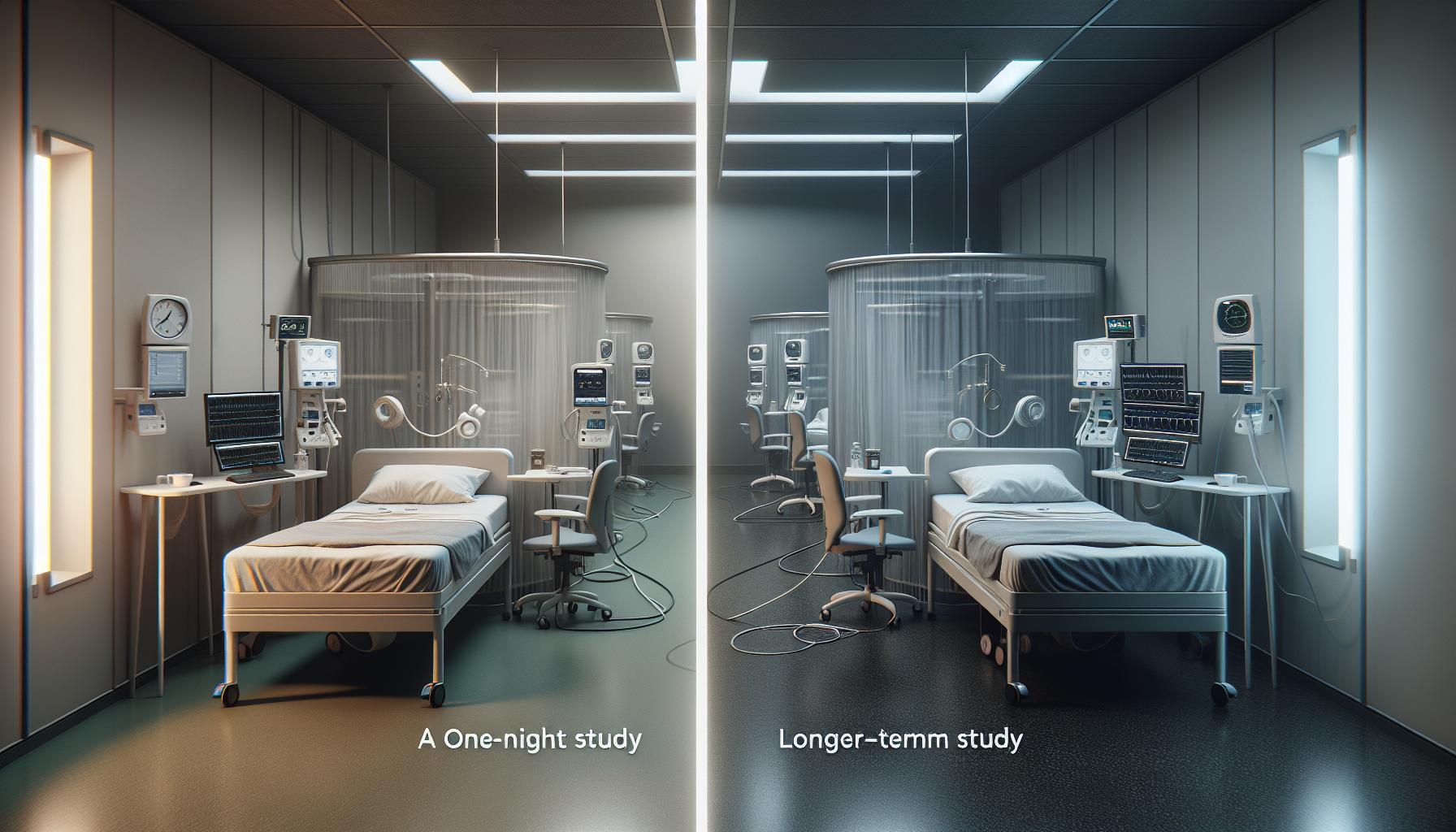
Types of Sleep Studies: Home vs. In-Lab Testing
The choice between home sleep studies and in-lab testing can significantly influence your experience and the accuracy of the results, depending on your specific situation and needs. Both methods have their merits, and understanding the differences can help you make an informed decision.
Home sleep studies, often referred to as portable monitoring, allow you to conduct a sleep assessment in the comfort of your own bed. This setup typically involves a simplified device that measures key parameters such as oxygen levels, heart rate, and airflow. Advantages include reduced anxiety from familiar surroundings and the potential for more natural sleep patterns, which may lead to clearer insights into your sleep issues. However, it’s crucial to note that home tests are generally best suited for diagnosing conditions like obstructive sleep apnea and may not provide comprehensive data for more complex sleep disorders.
In contrast, in-lab testing, usually a polysomnography study, offers a much more detailed and controlled environment. Conducted overnight in a sleep clinic, this method involves multiple sensors that monitor a wide array of metrics, including brain waves, muscle activity, and breathing patterns. While some individuals may find the hospital setting intimidating, this method captures a full picture of your sleep architecture and can identify various disorders beyond sleep apnea, such as REM behavior disorder or narcolepsy. It’s typically recommended when preliminary results from a home study are inconclusive or when other medical conditions complicate the assessment.
When deciding between these two options, consider your comfort level, the complexity of your symptoms, and any guidance from your healthcare provider. If you are concerned about sleeping away from home, a home sleep study may be a better fit. Conversely, if your doctor suspects a multifaceted issue or requires extensive data, in-lab testing may be more appropriate, despite the initial discomfort. Ultimately, understanding each option helps ensure you receive the right evaluation to support your path toward better sleep health.
Preparing for Your Sleep Study: Essential Steps
Preparing for a sleep study can be an important step in understanding and improving your sleep health. Whether you’re undergoing a home sleep test or an in-lab polysomnography, being well-prepared can help ease anxiety and ensure the study goes smoothly. Here’s what you need to know to get ready.
First, follow any specific instructions provided by your healthcare provider. These recommendations might include avoiding caffeine and alcohol a day or two before your study, as these substances can affect your sleep patterns. Additionally, try to maintain a regular sleep schedule leading up to the study for the most accurate results.
Next, familiarize yourself with the equipment if you’re doing a home sleep study. You may be supplied with a device that records key metrics like breathing patterns and oxygen levels. Understand how to wear or set it up, as this is vital for obtaining reliable data. If you’re having an in-lab study, know that you’ll be connected to multiple sensors, and while this might feel uncomfortable, it is designed to gather comprehensive insights into your sleep stages and disturbances.
It’s also beneficial to gather any relevant medical history or symptoms to discuss with your sleep specialist. If you’ve kept a sleep diary, bring that along, as it may provide valuable context for your study. For those feeling nervous about sleeping in an unfamiliar environment, consider practicing relaxation techniques such as deep breathing or meditation to help calm your mind before bedtime.
Lastly, don’t forget practical considerations like attire. Wear comfortable, loose-fitting pajamas and avoid heavy lotions or hair products that might interfere with the sensors. By taking these essential steps, you can approach your sleep study with confidence, setting the stage for meaningful insights into your sleep health.
What Happens During a Sleep Study: A Step-by-Step Guide
During a sleep study, participants can expect a carefully orchestrated process designed to gather valuable data about their sleep patterns. Whether it’s a one-night in-lab study or a longer home test, understanding what to anticipate can significantly alleviate any anxiety.
Upon arrival at the testing facility, you’ll typically be greeted by a sleep technician who will explain the procedure. If you’re undergoing an in-lab polysomnography, the first step involves setting up the equipment. This process includes the application of sensors to various parts of your body. Electrodes are placed on your scalp, temples, and jaw to monitor brain waves and muscle activity. Additionally, you will have sensors attached to your chest to measure heart rate and breathing patterns, and a finger clip to assess oxygen levels. While this may sound daunting, rest assured that the technicians are experienced and will help you feel comfortable throughout the setup.
Once the equipment is ready, you will be guided to a cozy sleep room designed to replicate a home environment as much as possible. Familiarizing yourself with the space can help ease pre-sleep jitters. Once you’re settled, bedtime will be closely monitored. The technician may check in periodically to ensure everything is functioning correctly, which can be reassuring during the night.
During the study, you will be asked to sleep naturally, as the aim is to capture your usual sleep patterns. The collected data will help in diagnosing various sleep disorders, such as sleep apnea or insomnia. For home sleep studies, the setup is a bit different; you’ll be given a portable device to wear at home, designed to track essential sleep metrics without the potential discomfort of an in-lab setting. Before starting, take some time to read the instructions provided, ensuring you understand how to use the equipment effectively.
Overall, the goal of the sleep study is to help you and your healthcare provider gain insights into your sleep health. By understanding the equipment and processes involved, you can approach your sleep study with greater confidence, turning the experience into a step forward in managing your sleep health.
Common Reasons for Sleep Studies: When to Consider Them
Experiencing poor sleep can be frustrating and detrimental to your overall health, which is why understanding when to consider a sleep study is essential. If you often find yourself feeling fatigued during the day, struggling to concentrate, or facing mood swings, these may be signs that something is amiss with your sleep patterns. Let’s explore some common reasons why individuals seek a sleep study, helping you determine if it’s time to take this important step.
Sleep studies are instrumental in diagnosing serious conditions such as sleep apnea, which can lead to significant health problems if left untreated. Symptoms to watch for include loud snoring, gasping for air during sleep, and excessive daytime sleepiness. If these sound familiar, you might consider a sleep study to get a clearer assessment of your condition. Additionally, conditions like insomnia-characterized by difficulty falling or staying asleep-may also warrant investigation through a sleep study if self-care strategies have proven ineffective.
Other Reasons to Consider
There are various other scenarios that might prompt the need for a sleep study:
- Chronic Fatigue: Persistent tiredness not linked to lifestyle or external factors can signal underlying sleep issues.
- Restless Legs Syndrome: If you experience uncomfortable sensations in your legs at night, a sleep study can help evaluate your symptoms.
- Unexplained Mood Changes: Changes in mood, particularly increased irritability or depression, can be tied to poor sleep quality.
- Medical Issues: Conditions such as diabetes, hypertension, or heart disease can be exacerbated by sleep disorders, prompting a need for assessment.
Deciding between undergoing a sleep study or merely tracking your sleep with a wearable device can be challenging. Wearables can provide insightful data about sleep duration and quality but might not capture critical details needed for diagnosing certain disorders. If you notice concerning patterns in your sleep or overall health, consulting a healthcare provider should be your first step. They can help determine whether a professional sleep study is warranted and guide you in making informed decisions about your sleep health.
Interpreting Sleep Study Results: A Simple Explanation
Interpreting the results of a sleep study can feel daunting, yet understanding the findings is vital for making informed decisions about your health. Typically, the results will include data points such as sleep stages, total sleep time, and any disruptions (arousals) that occurred during the night. This information is crucial for diagnosing conditions like sleep apnea, insomnia, or other sleep disorders.
Your sleep study report will usually summarize key metrics such as the time spent in different sleep stages (light, deep, and REM sleep). A healthy sleep pattern generally shows a balanced progression through these stages, while abnormalities might indicate specific issues. For example, significant interruptions during REM sleep may be associated with certain sleep disorders. It’s essential to review these details with a healthcare provider who can explain how they relate to your symptoms.
A common terminology you’ll encounter in your report includes “apnea-hypopnea index” (AHI), which quantifies the severity of sleep apnea by measuring the number of apneas (breathing stops) and hypopneas (shallow breaths) per hour. An AHI of fewer than 5 is considered normal, while higher values indicate varying severity of sleep apnea. Understanding your AHI score can guide treatment options-from lifestyle changes to CPAP therapy.
Overall, while sleep study results may seem overwhelmingly technical, they are tools designed to enhance your understanding of your sleep health. Engaging with your healthcare provider to interpret these findings fosters a collaborative approach to diagnosing and treating any underlying issues. Remember, you are not alone in this process, and there are effective paths to better sleep ahead.
Insurance Coverage for Sleep Studies: What You Need to Know
Navigating insurance coverage for sleep studies can be a daunting task, especially with the varying regulations and policies among different providers. In many cases, standard sleep studies, particularly those performed in a lab, can be costly, often ranging from $1,000 to $3,000 or more, depending on the facility and the complexity of the study. Understanding how these costs are managed by your insurance will empower you to make informed decisions.
Before scheduling a sleep study, it’s crucial to confirm whether your insurance will cover the procedure. A proactive approach includes contacting your insurance company and asking specific questions about your policy. Here are some key points to consider:
- Preauthorization: Many insurers require preauthorization for a sleep study. This means obtaining approval before the test to ensure it will be covered.
- In-Network vs. Out-of-Network: Check if the sleep center is within your insurance network. Out-of-network facilities may result in higher out-of-pocket costs.
- Type of Study: Different types of studies may have different coverage levels. For example, a home sleep study might be covered differently than an in-lab polysomnography.
- Deductibles and Copays: Be aware of your plan’s deductibles, copays, and coinsurance, as these will affect your total out-of-pocket expenses.
- Follow-Up Visits: Consider the potential costs involved with follow-up consultations after the sleep study, as these may also be subject to your insurance’s coverage policies.
To avoid unexpected expenses, gather all necessary documentation prior to your appointment. This includes your doctor’s referral, relevant medical history, and any prior sleep studies, which you can share with the sleep clinic. Armed with this information, you’ll be better positioned to clarify your coverage options and make the best choice for your sleep health.
Sleep Tracking Devices: Comparing Wearables and Professional Studies
Wearable sleep tracking devices have surged in popularity, promising to offer an easy way to monitor your sleep patterns without the need for a sleep study at a clinic. However, while these gadgets can provide valuable insights, the results they deliver often lack the depth and accuracy of professional sleep studies. Understanding the differences between them can empower you to make informed decisions about your sleep health.
Professional sleep studies, particularly polysomnography, typically require a night or more in a specialized sleep clinic, where a team of professionals conducts a thorough evaluation of your sleep. They monitor various bodily functions, including brain waves, blood oxygen levels, heart rate, and breathing patterns, allowing for a comprehensive assessment of sleep disorders such as sleep apnea, narcolepsy, or restless legs syndrome. This detailed, multifaceted approach can lead to accurate diagnoses and tailored treatment options.
In contrast, wearable devices often rely on movement detection and heart rate monitoring, which can give you a surface-level idea of your sleep quality and patterns. While some models integrate advanced technology to estimate various sleep stages, their algorithms might not account for all the complexities of sleep. Generally, wearables can report how long you slept, but they may struggle to determine whether the sleep was restful or fragmented, a crucial factor that could influence your overall health.
Key considerations when comparing these two options include:
- Data Accuracy: Professional studies provide medically validated data, while wearables offer estimations based on algorithms.
- Depth of Analysis: A clinical sleep study involves comprehensive monitoring, while wearables can miss crucial metrics.
- Cost: Sleep studies can be expensive but may be covered by insurance, whereas wearables usually involve a one-time purchase.
- Convenience: Wearables are easy to use and can be worn nightly, whereas sleep studies require a scheduled visit to a clinic.
When deciding between a sleep study and a tracker, consider your specific symptoms or concerns. If you’re experiencing severe sleep issues, consulting a sleep specialist and undergoing a professional evaluation is a wise choice. For those seeking general trends in sleep behavior or minor adjustments to improve sleep hygiene, a wearable device may suffice, allowing you to monitor your sleep patterns conveniently at home.
Managing Anxiety Before a Sleep Study: Tips and Techniques
Feeling anxious before a sleep study is common, and understanding how to manage that anxiety can significantly improve your experience. Many people worry about the unknowns associated with a sleep study, whether it’s the discomfort of sleeping in a new environment, potential embarrassment from being monitored, or simply the dread of finding out what their sleep issues might mean. Preparing mentally and physically can make a big difference in easing these concerns.
To start, familiarize yourself with what to expect during the study. Most sleep studies last one night, where you’ll be in a comfortable, private room equipped with high-tech monitoring devices. Knowing that trained professionals will be observing you to help diagnose conditions can provide reassurance. Consider visiting the facility ahead of time if that’s an option; seeing the setup and meeting some of the staff can help demystify the process.
Effective coping techniques like deep breathing, mindfulness, or guided imagery can also be beneficial. For instance, practicing deep breathing exercises the night before can help calm your nerves. Bringing a familiar item, such as a favorite pillow or blanket, can create a sense of comfort and security in the unfamiliar setting. Additionally, discussing your fears with the sleep technician can be a great way to alleviate anxiety; they’ve likely encountered similar concerns numerous times and can provide support.
Lastly, if you have specific questions or uncertainties, don’t hesitate to ask your healthcare provider beforehand. They can offer insights tailored to your situation, from explaining the monitoring process to discussing potential outcomes. Taking proactive steps to manage anxiety not only enhances your comfort but can also lead to a more accurate assessment, ensuring the study serves its purpose in improving your sleep health.
Advancements in Sleep Study Technology: What’s New?
The landscape of sleep study technology is evolving rapidly, providing new tools and methodologies to enhance our understanding of sleep. From sophisticated lab setups to home-based testing devices, advancements are enabling more personalized and comprehensive evaluations of sleep health. One of the most notable innovations is in the realm of non-invasive monitoring. Advanced sensors can now track sleep patterns through smartwatches and other wearables, allowing users to gather valuable data without the need for traditional lab settings.
In-lab sleep studies, also known as polysomnography, are integrating cutting-edge technologies that provide deeper insights into various sleep disorders. For example, modern sleep labs are equipped with enhanced EEG systems that can accurately measure brain activity, identifying specific sleep stages with remarkable precision. This not only aids in diagnosing conditions like sleep apnea and insomnia but also supports tailored treatment plans that cater to individual needs.
Home sleep monitoring devices have also seen significant improvements. Many of these devices now feature advanced algorithms that analyze data collected overnight, providing users with insights into their sleep quality, disturbances, and overall restfulness. They typically include functionalities for tracking heart rates, breathing patterns, and even blood oxygen levels, making it easier for individuals to monitor their health proactively. While these home tests can offer preliminary insights, it’s crucial to recognize their limitations compared to comprehensive lab studies.
Furthermore, the integration of artificial intelligence (AI) in sleep diagnostics is a game-changer. AI-powered analysis tools can detect subtle changes in sleep patterns that may indicate potential health issues far earlier than traditional methods. This capability allows for timely interventions, ultimately leading to better health outcomes. The ongoing research and development in this field suggest that we are heading towards more efficient and accessible sleep health management solutions. As these technologies continue to evolve, they promise to make sleep evaluations not only more informative but also less intrusive and more aligned with everyday life.
Real-Life Scenarios: Choosing Between a Study and a Tracker
Deciding between a professional sleep study and using a consumer sleep tracker can feel overwhelming, especially when you’re grappling with sleep issues. Understanding the strengths and limitations of both options can empower you to make the best choice for your needs. A professional sleep study, or polysomnography, typically lasts one night but can extend to multiple nights depending on the complexity of your condition. These studies provide a comprehensive overview of your sleep patterns, monitor your brain waves, heart rate, and breathing, and even gather detailed data about your sleep stages.
Conversely, sleep trackers-like those found in smartwatches or dedicated devices-offer a user-friendly alternative for monitoring sleep without the hassle of a lab visit. They predominantly track basic metrics like total sleep time and sleep interruptions. The data may help identify trends over time, but they lack the clinical depth that a sleep study provides. For example, if you frequently wake up feeling exhausted despite seemingly adequate sleep, a sleep study could help diagnose potential sleep apnea or other disorders, something a tracker can’t pinpoint effectively.
Here are some scenarios to consider when making your choice:
- Chronic Sleep Issues: If you’ve been dealing with persistent insomnia or excessive daytime sleepiness, a comprehensive sleep study can be critical for identifying underlying issues.
- Occasional Sleep Problems: For mild or occasional sleep disturbances, a tracker might suffice to help establish patterns or identify lifestyle factors contributing to poor sleep.
- Budget Considerations: Sleep studies can be expensive and may require insurance approval. Trackers, on the other hand, often represent a more affordable upfront cost.
- Preference for Convenience: If staying overnight at a lab sounds daunting, starting with a sleep tracker can provide initial insights into your sleep habits in the comfort of your home.
Ultimately, the choice between a sleep study and a sleep tracker hinges on the nature of your sleep concerns and the level of detail you require. Feel reassured that each approach has its place: a sleep study can provide the critical insights needed for effective treatment, while a tracker can be a useful first step in understanding your sleep without the need for immediate medical intervention. Keep in mind, if device readings indicate an issue, it may be time to transition to a formal sleep study for a deeper analysis.
FAQ
Q: How long does a typical sleep study last?
A: A typical sleep study usually lasts one night, but depending on the specific conditions being evaluated, it can sometimes extend to two or more nights. Some patients may require additional monitoring for a comprehensive diagnosis.
Q: What factors influence the duration of a sleep study?
A: The duration of a sleep study can be influenced by the specific disorder being investigated, the need for additional testing, and whether the study is performed in-lab or at home. Complex cases often necessitate longer monitoring periods.
Q: Can I leave the sleep study facility during a multi-night study?
A: Generally, participants must remain at the study facility overnight. However, in some cases of a multi-night study, you may be allowed to leave during the day but must return in the evening for monitoring.
Q: How is the sleep study setup different for home-based versus in-lab studies?
A: In-lab studies typically require an overnight stay in a specialized facility with professional monitoring, while home-based studies can be conducted in the comfort of your home using simpler portable equipment for one or more nights.
Q: What preparation is needed for a multi-night sleep study?
A: Preparation for a multi-night sleep study includes maintaining your regular sleep schedule, avoiding caffeine before bedtime, and bringing along comfortable sleepwear. Follow specific instructions from your healthcare provider.
Q: How do I know if I need a sleep study for more than one night?
A: If you experience severe symptoms like excessive daytime sleepiness or if a specific sleep disorder is suspected, your healthcare provider may recommend an extended study to gather more comprehensive data.
Q: What is the main goal of conducting a longer sleep study?
A: The primary goal of a longer sleep study is to gather more detailed information on sleep patterns and disturbances, facilitating a more accurate diagnosis and effective treatment plan. Check out the section on Common Reasons for Sleep Studies for more insights.
Q: Will my insurance cover the cost of a multi-night sleep study?
A: Coverage for a multi-night sleep study can vary based on your insurance policy. It’s best to consult your insurance provider directly to understand what costs will be covered and if you need prior approval.
The Way Forward
Understanding how many days a sleep study takes can empower your decision-making process regarding your sleep health. Whether it’s for one night or multiple nights, each option offers distinct benefits for identifying sleep disorders and improving your overall well-being. Don’t hesitate to take the next step; the sooner you explore your sleep patterns, the better you can support your health.
For more information on sleep studies, consider checking out our comprehensive guide on polysomnography, or explore our insights on different wearable devices that can monitor your sleep patterns effectively. If you still have questions, our sleep health advisors are here to help guide you through your options.
Remember, a good night’s sleep is essential to your health. Subscribe to our newsletter for the latest in sleep health tips and updates, and explore our resources to make informed decisions about your sleep journey. Your path to better sleep starts now!
Get our latest guides, news, and insights highlighted in your Google Search & AI Overviews.