
In a world where good sleep is crucial for our overall well-being, tracking our sleep patterns can be a game changer. Smart rings have emerged as innovative tools that not only monitor sleep but also provide insights to improve our rest quality. With so many options available, choosing the best smart ring for sleep tracking can feel overwhelming. That’s why it’s essential to understand what features matter most and how each device can support your sleep health goals. In this article, we explore the top three smart rings designed for sleep tracking, offering you valuable insights to help you make an informed decision. Dive in to discover which ring might just be the key to unlocking better sleep for you!
Understanding Sleep Tracking Technology in Smart Rings
is vital for anyone looking to improve their rest and overall well-being. Unlike traditional wearables, which can be bulky and cumbersome, smart rings offer a sleek and discreet alternative that can deliver valuable insights into your sleep patterns. By utilizing advanced sensors and algorithms, these rings can monitor various metrics such as heart rate, body temperature, movement, and even blood oxygen levels throughout the night. This data helps users gain a clearer picture of their sleep cycles, identify trends, and make informed adjustments to their nighttime routines.
The technology behind sleep tracking in smart rings typically involves a combination of photoplethysmography (PPG) and accelerometry. PPG uses light sensors to measure changes in blood volume as you sleep, allowing for heart rate tracking. On the other hand, accelerometers detect movement, enabling the ring to discern between various sleep stages, such as light sleep, deep sleep, and REM sleep. The combination of these technologies provides users with a more comprehensive understanding of their sleep quality, offering insights that can lead to improved health outcomes.
For those new to sleep tracking, it’s essential to understand what to expect when using a smart ring. Most devices will require a companion app for set up and data visualization, helping you interpret your sleep data easily. You can expect to see your sleep duration, the quality of sleep stages, and potentially even recommendations to improve your sleep hygiene. This real-time feedback can empower users to make changes like adjusting their sleep environment or routines to enhance sleep quality.
Integrating a smart ring into your nightly routine can be seamless and intuitive, offering a valuable tool in the quest for better sleep while maintaining a low profile. The ability to track such detailed information in such a compact device underscores the growing trend towards personalized health technology, providing actionable insights that can genuinely transform your sleep experience.
Key Features to Look for in Sleep Tracking Rings
When considering a smart ring for sleep tracking, it’s essential to know what features can significantly enhance your sleep experience. These devices are not just stylish accessories; they combine cutting-edge technology with user-friendly functionality to provide insights into your sleep health. Understanding these key features can help you make an informed decision that aligns with your wellness goals.
Sensor Technology
One of the primary advantages of sleep tracking rings is the integration of advanced sensor technology. Look for rings equipped with photoplethysmography (PPG) sensors, which monitor blood volume changes to track heart rate and overall cardiovascular health during sleep. Additionally, accelerometers are crucial as they detect motion and can effectively differentiate between sleep stages-such as light sleep, deep sleep, and REM sleep. By analyzing these metrics, a smart ring can offer a comprehensive overview of your sleep quality.
Battery Life
Another vital consideration is battery life. Smart rings typically offer longer battery life compared to traditional smartwatches, often lasting several days on a single charge. This longevity allows for continuous monitoring without the hassle of nightly recharging, which is especially beneficial for tracking sleep patterns over time. Look for models that offer at least four to seven days of battery life, ensuring consistent data collection.
User-Friendly App Integration
Most smart rings come with a companion app, which plays a crucial role in enhancing the user experience. A well-designed app should provide clear and accessible insights into your sleep metrics, including total sleep time, sleep interruptions, and insights for improvement. Apps that offer personalized recommendations or seamless integration with other health data (such as diet or exercise) can significantly augment the value of your smart ring.
Comfort and Design
Since these devices will likely be worn overnight, their comfort is paramount. Choose a ring that has an adjustable fit and is made of breathable materials to ensure comfort during sleep. A sleek, lightweight design not only minimizes physical discomfort but also makes it easier to integrate the ring into your daily life.
When you’re on the hunt for a smart ring tailored for sleep tracking, focusing on these features will empower you to select a device that best suits your needs. Consider how the ring’s technology aligns with your sleep goals, and remember, investing in a device that supports better sleep can lead to significant improvements in your overall well-being.
Top 3 Smart Rings for Sleep Tracking: A Detailed Review
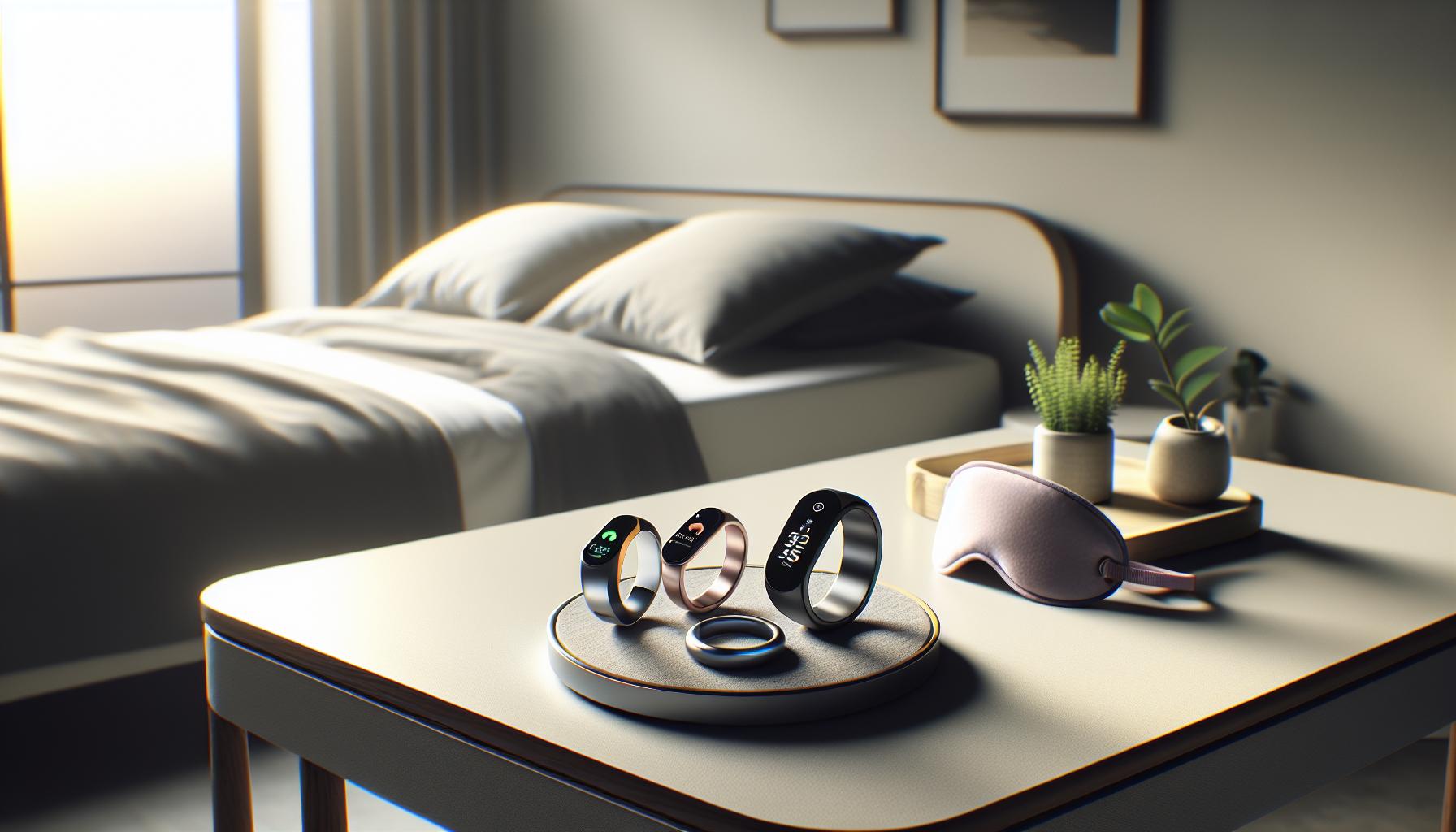
When it comes to choosing a smart ring specifically for sleep tracking, a few standout options have garnered attention for their advanced features and user-friendly design. These rings not only provide crucial insights into your sleep patterns but also offer added health tracking capabilities. Below are three of the best smart rings for sleep tracking currently available, each with its unique strengths.
1. Oura Ring Generation 3
The Oura Ring is widely regarded as a leading option in the smart ring market for sleep tracking. Its sophisticated sensor technology includes advanced photoplethysmography (PPG) and temperature sensors, allowing for detailed metrics on heart rate variability, sleep staging, and overall recovery. One of its distinguishing features is the sleep score it provides, offering a straightforward assessment of sleep quality based on various factors. The Oura app is intuitive and visually appealing, presenting a wealth of data in a user-friendly format. The battery life of around seven days means you can track your sleep without the need for frequent recharging, making it an excellent choice for long-term sleep analysis. Priced at approximately $299, it is a worthy investment for those serious about understanding their sleep health.
2. Motiv Ring
The Motiv Ring stands out not only for its sleek design but also for its comprehensive health tracking capabilities. With a focus on activity tracking in addition to sleep, it monitors sleep stages and provides insights through an easy-to-use app. The Motiv Ring’s battery lasts about five days, allowing you to wear it continuously without interruption. One notable feature is its heart rate monitoring, which can provide insights into how your heart rate variability affects sleep quality. Retailing at around $199, it offers a more affordable option while still delivering solid sleep tracking features.
3. Sleeptracker Ring
The Sleeptracker Ring is designed specifically for improving sleep quality. It utilizes advanced sleep algorithms to analyze your sleep patterns, providing personalized recommendations to enhance your nightly rest. It features an impressive battery life, lasting up to ten days, which is ideal for tracking sleep without any downtime. The ring also syncs seamlessly with the Sleeptracker app, which provides users with a comprehensive overview of their sleep health. Priced at approximately $149, it’s one of the more budget-friendly options available, making it an excellent choice for those looking to improve their sleep without breaking the bank.
In summary, when selecting a smart ring for sleep tracking, consider your specific needs, budget, and the additional features that might be beneficial for your overall health. Each of these rings offers unique advantages, from Oura’s detailed analytics to Motiv’s activity tracking and Sleeptracker’s focus on sleep improvement. By investing in the right smart ring, you can gain valuable insights into your sleep patterns and make informed decisions to enhance your well-being.
Comparative Analysis: Smart Rings vs. Traditional Sleep Trackers

The rise of smart rings as an alternative to traditional sleep trackers has prompted many to reconsider how they monitor their sleep health. Smart rings, such as the Oura Ring and Motiv Ring, offer a compact and stylish option for tracking not just sleep, but also activity and general health metrics. This multifunctionality stands in contrast to traditional sleep trackers, often worn as wristbands or placed under pillows, which typically focus solely on sleep patterns and may lack comprehensive health insights.
One significant advantage of smart rings is their unobtrusive design, allowing users to wear them comfortably throughout the day and night without the bulk of a watch or band. This encourages consistent tracking of sleep patterns, heart rate, and even body temperature, leading to more accurate data. Traditional devices, while effective, can sometimes be cumbersome, leading to inconsistent usage. For instance, users might forget to wear a wristband at night or find it uncomfortable, while a smart ring’s lightweight design is less likely to disrupt sleep.
Cost is another differentiating factor. Smart rings like the Sleeptracker Ring are available at competitive prices, often ranging from $149 to $299, providing features that are comparable to higher-end sleep monitors. In contrast, many traditional sleep trackers also require subscriptions for full app functionality or additional features. Consumers should consider their budget and the importance of multifunctionality, as smart rings often combine sleep tracking with health metrics, offering more value in one device.
In summary, when comparing smart rings to traditional sleep trackers, the advantages of convenience, design, and cost-effectiveness make smart rings an appealing choice for many users looking to enhance their sleep hygiene. As technology advances, these small devices are proving they can hold their own against more established tracking options, empowering users to take control of their sleep health with ease.
How Accurate Are Smart Rings in Sleep Tracking?
When considering a smart ring for sleep tracking, accuracy is often top of mind for potential users. Smart rings, like the popular Oura Ring and other leading models, utilize advanced sensors to monitor various health metrics, including heart rate, breathing rate, and motion, to derive insights into sleep patterns. However, how do these wearable devices stack up against traditional sleep monitoring methods?
Smart rings integrate features such as accelerometers and photoplethysmography (PPG) to gauge sleep stages-from light to deep sleep-much like clinical sleep studies, which often involve polysomnography. While polysomnography can provide comprehensive data in a controlled environment, smart rings offer real-time insight in a natural sleeping setting, which many users find beneficial. Nonetheless, the accuracy of smart rings can vary based on several factors, such as how the ring fits, skin conditions, and even the user’s activity level prior to sleep, which might temporarily affect metrics like heart rate variability.
Several studies have indicated that while smart rings can provide a good approximation of sleep stages, they may not always align perfectly with lab-grade results. Generally, users can expect a close estimation-a +/- 10% variance is typical-especially for overall sleep duration. It’s crucial for consumers to bear in mind that these wearable devices excel at offering trends and patterns over time, providing valuable feedback for lifestyle adjustments rather than serving as a definitive diagnostic tool.
For those looking to maximize the accuracy of their data, maintaining a proper fit is essential. Users should ensure the ring is snug enough to accurately capture biometric data without being uncomfortable. Additionally, keeping the ring clean and following usage guidelines will help improve its reliability. While smart rings can offer insightful data about sleep health, it’s important to view the results in context, acknowledging that they serve as a guide rather than an absolute measure.
In essence, smart rings present an innovative and convenient way to track sleep, offering a practical solution for individuals looking to improve their sleep quality. While they may not completely replace traditional sleep studies, they certainly provide a user-friendly alternative for ongoing sleep monitoring, empowering users to take charge of their sleep hygiene and overall well-being.
The Science Behind Sleep Tracking: How It Works
Sleep tracking technology has dramatically evolved over the years, and smart rings are at the forefront of this change. These compact, discreet devices utilize a combination of advanced sensors to monitor sleep patterns, providing users with insights into their sleep quality and overall health. The key to their effectiveness lies in how they gather and analyze biometric data throughout the night.
Smart rings typically include sensors like accelerometers, which detect movement, and photoplethysmography (PPG), which measures heart rate and blood flow. By analyzing these biometrics, the rings can differentiate between various sleep stages-such as light, deep, and REM sleep. This assessment mimics some aspects of traditional sleep studies, like polysomnography, which requires more complex setups and is conducted in clinical settings. However, one of the primary benefits of smart rings is that they offer real-time insights in a natural sleeping environment, allowing users to track their sleep without the intrusiveness of traditional methods.
To optimize the accuracy of sleep tracking, it’s vital to ensure a proper fit. A snug but comfortable fit allows the sensors to gather precise data, minimizing inaccuracies caused by movement or slippage. Additionally, factors like skin temperature and hydration can impact readings, reminding users to maintain a consistent routine for the best results. While smart rings deliver compelling insights, it’s essential to view these as trends over time rather than exact measurements-expect about a +/- 10% variance compared to clinical results on sleep duration. By understanding these nuances, consumers can better leverage the advantages of smart rings to enhance their sleep and health.
The rise of smart rings marks an exciting intersection of technology and personal health, empowering individuals to take control of their sleep hygiene with relative ease. As they offer a blend of convenience and insightful data, these devices are well-suited for anyone looking to improve their sleep quality without the confines of traditional monitoring methods.
User Experiences: Real-Life Benefits of Smart Rings
Many users have reported transformative experiences after beginning to use smart rings for sleep tracking, often noting significant improvements in their sleep quality and overall well-being. These devices provide actionable insights that empower users to make informed decisions about their sleep hygiene. For instance, one user shared how the ring helped identify consistent patterns of restlessness during the night, prompting lifestyle changes like reducing caffeine intake in the afternoon. As a result, they experienced longer periods of uninterrupted sleep, leading to increased alertness during the day.
Another compelling aspect of smart rings is their ability to generate comprehensive reports, detailing not only sleep duration but also the quality of sleep across different stages, such as REM and deep sleep. Users often appreciate these metrics because they offer a clearer understanding of their sleep health. For example, individuals suffering from insomnia have successfully used this data to seek targeted therapies and medications, greatly improving their sleep patterns. Moreover, users report feeling less anxious about their sleep when they can track progress over time, thereby reducing stress often associated with sleep studies or traditional tracking methods.
In addition to personalized insights, the compatibility of smart rings with various health and wellness apps provides added value. Users can easily integrate their sleep data with fitness tracking, hydration goals, or mindfulness practices, creating a holistic approach to health and wellness. This interconnectedness can lead to enhanced motivation, as users see how their lifestyle choices impact both their sleep and overall health.
When it comes to ease of use, setting up a smart ring for optimal sleep tracking is generally straightforward, and many users appreciate the user-friendly apps that accompany these devices. A snug fit during the night ensures accurate data collection, which many users find invaluable. Regular users suggest tidying up sleep environments-like dimming lights and keeping a consistent bedtime-as effective strategies to complement the data-driven insights provided by the rings.
Ultimately, those who incorporate smart rings into their sleep routine often find themselves not just monitoring their sleep but actively enhancing it, leading to improved daily functioning and overall life satisfaction. With these real-life benefits in mind, potential buyers can see smart rings not merely as gadgets but as tools that can genuinely transform their approach to sleep health.
Setting Up Your Smart Ring for Optimal Sleep Tracking
To truly harness the power of a smart ring for sleep tracking, the initial setup and ongoing usage are crucial. These compact devices can provide valuable insights into your sleep patterns, but they require a bit of preparation to ensure you get the most out of them. First, ensure you choose a model known for its accuracy and reliability, as not all smart rings are created equal. Look for rings that feature heart rate monitoring, skin temperature sensors, and guided insights, as these can significantly enhance your understanding of sleep quality and duration.
Getting started is relatively straightforward. Once you have your smart ring, download the companion app recommended by the manufacturer. This app will serve as your primary interface, enabling you to customize settings and view your sleep data. During the setup process, pay attention to the following key steps:
- Fit and Comfort: It’s essential that the smart ring fits snugly on your finger but is not too tight. This ensures accurate sensor readings. Wear it for a few nights during the day to get accustomed to it before using it at night.
- App Configuration: Use the app to input details such as your ideal sleep times, health goals, and any specific conditions you might want the ring to track. This personalization can help tailor the insights you receive.
- Power and Connectivity: Make sure the ring is charged and properly connected to your mobile device. Most smart rings use Bluetooth for syncing, so ensure Bluetooth is enabled
- Sleep Environment Optimization: Consider supplements to the data provided by your smart ring through practices like creating a calming bedtime routine. Dimming lights and reducing noise can enhance sleep quality.
As you embark on your journey with a smart ring, be aware of its capabilities. While they provide insights into your sleep stages, heart rate, and overall patterns, they are not a substitute for professional medical equipment or evaluations. Setting realistic expectations about what your smart ring can tell you about your sleep will lead to a more satisfying experience. Ultimately, by actively engaging with the data your smart ring collects-like noting how lifestyle changes affect your sleep-you can create a personalized approach to enhancing your nightly rest.
Troubleshooting Common Issues With Smart Rings
Even the most advanced technology can encounter hiccups, and smart rings are no exception. When using these sophisticated devices for sleep tracking, you may face challenges like inaccurate readings or connectivity issues. Addressing these problems can greatly enhance your overall experience and ensure you’re gaining the valuable insights you seek.
One common issue is the smart ring not syncing with the companion app. If this happens, start by checking your Bluetooth connection; ensure it’s turned on for both the ring and your device. If the problem persists, try closing the app completely and reopening it. In some cases, restarting your phone can help reset the connection. Ensure that the ring is charged adequately; low battery levels can affect connectivity and the accuracy of data collection.
Inaccurate sleep data is another concern. If you notice inconsistencies in the sleep tracking results, check the fit of the ring. A poorly fitted ring can lead to unreliable sensor readings. It should be snug enough not to move around but comfortable enough for extended wear. Additionally, review your app settings to make sure you’ve configured it to capture the right metrics, like specific sleep times or health goals you want to track. Sometimes, adjusting these settings helps the device perform better.
Lastly, many users experience battery drain as a common frustration. To mitigate this, consider using battery saver modes if your ring offers one. Regular updates to the companion app can also improve performance and address known bugs that may drain battery life. If all else fails, consulting the user manual or the manufacturer’s support team can provide specific troubleshooting steps tailored to your model.
By proactively addressing these common issues, you can maximize your smart ring’s capabilities and ensure that the data you receive is precise and fruitful in your pursuit of better sleep health.
Cost Analysis: Are Smart Rings Worth the Investment?
Investing in a smart ring designed for sleep tracking can lead you to a treasure trove of insights into your sleep patterns and overall wellness. On average, these devices range from $100 to $300, depending on features and brand. When compared to traditional sleep studies, which can cost over $1,000, smart rings offer a more accessible option for regular sleep monitoring without the need for medical equipment or extensive setups. Yet, the question remains: are they worth it?
One of the primary considerations is the functionality and data provided by these devices. Smart rings often track sleep stages, monitor heart rate variability, and even analyze your respiratory rate. This data is typically displayed in a connected app, allowing you to visualize trends and anomalies that could suggest sleep disorders or other health issues. The convenience of receiving this information directly on your smartphone enhances user experience and empowers individuals to take action towards improving their sleep health.
However, while the functionality may be impressive, buyers should weigh the potential limitations. Accuracy can vary between models, and the technology is still evolving. Some users report discrepancies in data compared to traditional sleep studies or other wearables. Additionally, the durability and battery life can be points of concern, as these devices generally need frequent charging. Therefore, it’s crucial to select a model known for reliability and user satisfaction.
Ultimately, if you’re committed to enhancing your sleep quality and tracking progress over time, investing in a smart ring can be worthwhile. Just be sure to consider what specific features you value most, set realistic expectations about the accuracy of the data, and select a brand that is well-reviewed for its effectiveness in actual sleep tracking. A well-informed decision will not only provide insights into your sleep but also lead you on the path toward better overall health.
Future Trends in Sleep Tracking Technology
As sleep tracking technology continues to evolve, the future of smart rings looks promising with innovations that cater to a more personalized and in-depth understanding of sleep health. Enhanced biometric sensors and advanced algorithms will likely lead to more accurate data collection and analysis, allowing individuals to gain deeper insights into their sleep patterns. For instance, future smart rings may incorporate infrared or temperature sensors to detect variations in body temperature during different sleep stages, providing users with actionable feedback for optimization.
Integration with Smart Home Technology
A key trend will be the seamless integration of smart rings with other smart home devices. Imagine your sleep tracker communicating with your smart thermostat to adjust the room temperature based on your sleep cycles or connecting with smart lights to simulate natural sunrise, gently waking you up at the optimal time. This interconnected ecosystem will allow for a more holistic approach to sleep hygiene.
AI and Predictive Analytics
Artificial Intelligence (AI) is also set to revolutionize sleep tracking. Future iterations of smart rings may employ machine learning to predict sleep disturbances based on user habits and environmental factors. For example, if a user consistently experiences poor sleep quality with certain lifestyle choices-like late-night screen time-AI could prompt them to adjust their behavior before issues arise. By analyzing past patterns, these devices can provide customized suggestions, such as ideal bedtimes or stress management techniques, greatly enhancing user experience.
Real-Time Sleep Monitoring
The ability to monitor sleep in real-time is likely to become a standard feature. This will enable immediate feedback regarding sleep stages and disturbances, empowering users to make live adjustments-whether it’s a simple change in the sleep environment or practicing breathing exercises to address anxiety. Furthermore, future rings may offer alerts for abnormal patterns that could indicate health issues, pushing users to seek professional advice when necessary.
Ultimately, as these technologies advance, the focus will likely shift towards not only monitoring sleep quality but also enhancing overall wellness and lifestyle choices. By investing in a smart ring today, users position themselves at the forefront of a sleep revolution that will redefine how we view and manage our most crucial health resource: sleep.
Expert Recommendations for Choosing the Right Smart Ring
When it comes to selecting the right smart ring for sleep tracking, the choices can be overwhelming due to the rapid advancements in technology and the diversity of options available. Understanding your specific needs and how different features align with your sleep goals can significantly enhance your sleep health journey. Here are some expert recommendations to guide your decision-making process.
Begin by evaluating the core functionalities you desire in a smart ring. Look for capabilities such as heart rate monitoring, sleep pattern analysis, and movement detection, which are crucial for accurate sleep tracking. Some rings offer additional health metrics, like SpO2 levels or temperature changes, providing deeper insights into your overall wellness. Be mindful of battery life as well; a device that requires frequent charging can interrupt your tracking.
In addition to functionality, consider the design and comfort. Since you’ll be wearing the ring while you sleep, it should be lightweight and fit snugly without causing discomfort. Options with adjustable sizing or customizable designs can enhance wearability, ensuring that you enjoy a good night’s sleep without feeling constricted.
Pay attention to compatibility with other devices and apps. Many smart rings sync with health and wellness applications, allowing for a more comprehensive view of your sleep habits alongside daily activities. This integration can be beneficial for tracking patterns over time and making informed adjustments. It’s also wise to look for products with good reviews regarding their accuracy and user experience, as real-life user feedback can provide insights into practical benefits versus marketing claims.
Finally, consider the cost and warranty options. Smart rings can vary significantly in price, from budget-friendly models to more premium offerings. Assess your budget while keeping in mind that an effective investment in your sleep health may yield significant benefits in the long run. Look for warranties or satisfaction guarantees, which can offer peace of mind as you experiment with new technology to enhance your sleep quality.
By focusing on these key areas-functionality, design, compatibility, and cost-you can make a more informed choice that aligns with your individual needs and supports your overall sleep health objectives.
Frequently asked questions
Q: What features should I look for in a smart ring for sleep tracking?
A: When selecting a smart ring for sleep tracking, prioritize features like accurate heart rate monitoring, sleep stage analysis, and breathability of materials. Look for compatibility with health apps, battery life, and user-friendly setup to enhance your sleep insights.
Q: How do smart rings compare to other sleep tracking devices?
A: Smart rings are generally more subtle and comfortable than wearables like smartwatches. They offer continuous data collection, including heart rate and temperature, which may provide insights that are harder to obtain with traditional trackers.
Q: Are smart rings suitable for everyone for sleep tracking?
A: While smart rings can effectively track sleep for many, they may not suit individuals with larger hands or those who prefer different tracking methods. It’s advisable to assess comfort and fit before purchasing to ensure optimal performance.
Q: What is the average cost of a good smart ring for sleep tracking?
A: The average price for a quality smart ring ranges from $100 to $300. Higher-end models often offer advanced features like blood oxygen levels, making them worth the investment for serious sleep tracking enthusiasts.
Q: How accurate are smart rings in measuring sleep quality?
A: Smart rings provide generally accurate sleep data, often reflecting sleep cycles effectively. However, individual results may vary based on usage and body type. For best results, ensure proper ring fitting during sleep for accuracy.
Q: Can smart rings detect sleep disorders?
A: Smart rings can offer insights into sleep patterns that might indicate sleep disorders, such as sleep apnea or insomnia. However, they should not be used as a substitute for professional medical evaluations. Always consult a healthcare provider for concerns.
Q: How can I improve the accuracy of my smart ring’s sleep tracking?
A: To enhance accuracy, ensure the ring fits snugly on your finger, avoid excessive movement while sleeping, and wear it consistently every night for comparative data. Regular updates via the associated app can also optimize performance.
Q: What should I do if my smart ring isn’t tracking sleep properly?
A: If your smart ring is not tracking sleep effectively, first check the fit, update the firmware, and ensure the sensors are clean. For persistent issues, consult the device’s troubleshooting guidelines or seek support from the manufacturer.
Wrapping Up
Now that you’re equipped with insights on the best smart rings for sleep tracking, you’re one step closer to optimizing your rest and improving your overall well-being. With options like the Oura Ring, Motiv Ring, and Go2sleep, each designed to help you better understand your sleep patterns, you can take action today to unlock deeper, more restorative sleep.
If you still have questions or concerns about which smart ring suits you best, we invite you to explore our comprehensive guide on sleep studies and delve into the latest wearable technology in our comparison articles. And don’t forget to subscribe to our newsletter for exclusive tips on enhancing your sleep health and access to our expert sleep health advisors.
Take control of your sleep health now-invest in a smart ring, start tracking, and discover the benefits of quality sleep. Share your experience in the comments below, and let us know if there are other topics you’d like us to cover in future posts. Together, let’s navigate the world of sleep tech and empower your journey to better sleep!
Get our latest guides, news, and insights highlighted in your Google Search & AI Overviews.